


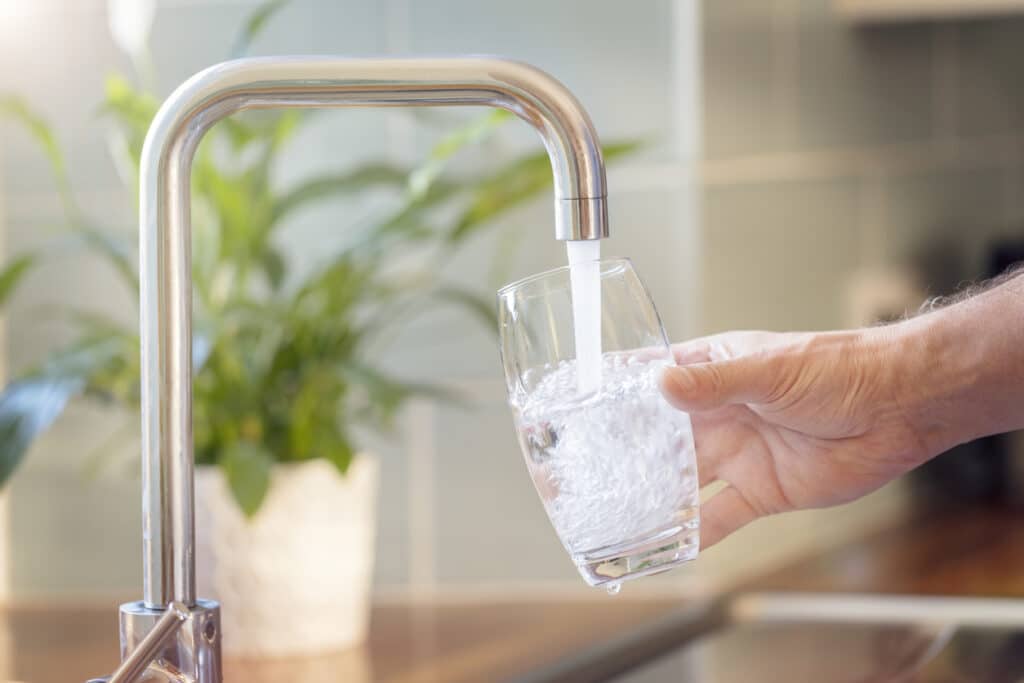
Standing at a kitchen sink, we can tell a lot just by how the water behaves. Sometimes it leaves a cloudy film on glassware. Other times, there’s a faint chlorine smell that lingers in the air. When we check pipes under the sink, we might see white crust building along fittings or hear popping sounds in the water heater.
As plumbers, we see that nearly every water supply contains impurities. Some are harmless, while others affect taste, appliances, or plumbing materials. Water treatment focuses on reducing what causes problems. Different systems target different issues, which is why more than one treatment method sometimes makes sense.
Reverse Osmosis
When we install a reverse osmosis unit, we usually start under the sink, where space feels tight. These systems use several filters and a thin membrane to strain out very small contaminants. During service, we notice how much sediment and residue the prefilters catch before water reaches the membrane.
Reverse osmosis removes many dissolved substances like lead, nitrates, and certain chemicals. After treatment, water passes through a carbon filter that improves taste. The difference shows up fast when you fill a glass. The water smells cleaner and leaves fewer spots once it dries.
Ultraviolet Disinfection
Ultraviolet treatment works quietly inside a sealed chamber. We often install it near where water enters the home. There’s no change in taste or smell because nothing gets added or removed.
The UV light disrupts bacteria, viruses, and parasites as water flows past it. We can tell it’s working by checking indicator lights and inspecting the sleeve around the lamp for clouding. This method works best when paired with filtration that removes sediment first.
Activated Carbon
Activated carbon filters are common, and for good reason. When water passes through them, chlorine odors fade quickly. We often notice reduced chemical smells during testing.
These filters trap compounds like VOCs and certain metals. In homes with older plumbing, they can also catch lead particles that break loose from pipe walls. Carbon filters need regular replacement, which we track by looking at pressure drop and flow changes.
Water Softener
This area has very hard water, and we see its effects daily. Limescale coats pipe interiors and heating elements. Hot water lines usually show it first.
A water softener swaps calcium and magnesium for sodium ions. That change reduces scale buildup inside pipes and appliances. We do note sodium concerns for certain households, so placement and settings matter.
Water treatment works best when it matches what your plumbing is showing you. At Andy’s Plumbing of Ormond Beach, FL, our water treatment services keep your water clean, so call us today.

